
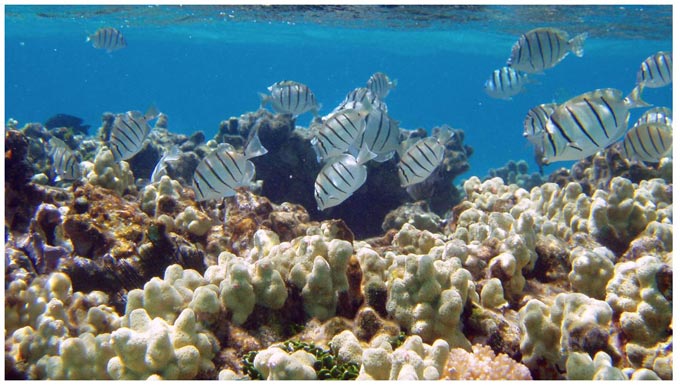
Fish and finger coral at Papahānaumokuākea Marine National Monument, Hawaii, which President George W. Bush established in 2006 using the Antiquities Act. credit: NOAA
June 12, 2026 - On Thursday, the National Parks Conservation Association released the following:
Statement by Sarah Barmeyer, Deputy Vice President of Conservation Programs for the National Parks Conservation Association:
“This attempt to remove protections from marine monuments is illegal. The American people have repeatedly supported protection for more marine areas – not less. This proclamation to open commercial fishing will reverse science-proven gains that have taken place since these protections were enforced.
“There are few places on Earth that remain as wild and minimally impacted by human activity as those is Rose Atoll Marine National Monument in American Samoa. It’s among the most pristine places in the world, home to a vibrant coral reef system teeming with sharks, tuna and threatened and endangered sea turtles.
“Because it is so remote, Rose Atoll provides vital habitat for nesting sea turtles and shorebirds that frequent the lands and waters of the National Park of American Samoa, where the tourism economy thrives from the unique wildlife that can be found here. All national monuments – including marine ones – must prioritize resource protection over commercial activity. These places are too special and too important to science and our future to destroy.”
“We’ll continue to fight to ensure Rose Atoll, Papahānaumokuākea, Mariana Trench and all of our national monuments, remain protected as they were intended, to ensure generations from now, they exist as they do today.”
About the National Parks Conservation Association: Since 1919, the nonpartisan National Parks Conservation Association (NPCA) has been the leading voice in safeguarding our national parks. NPCA and its more than 1.9 million members and supporters work together to protect and preserve our nation’s most iconic and inspirational places for future generations. For more information, visit www.npca.org.
Source: National Parks Conservation Association