
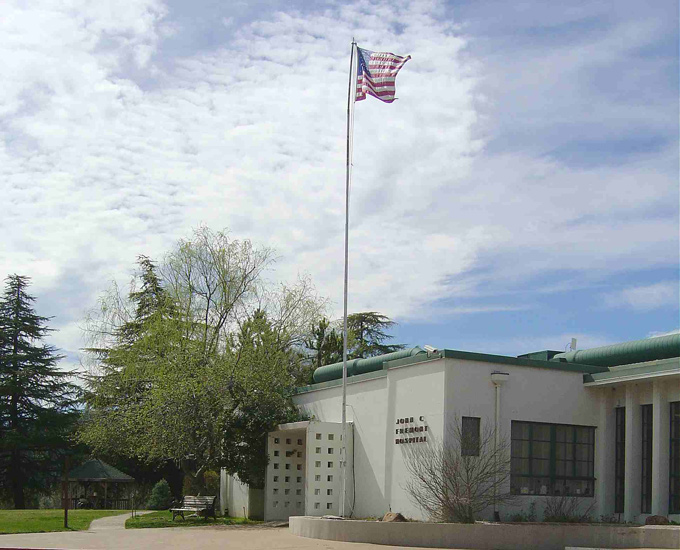
Rural Hospital, John C. Fremont Hospital in Mariposa Credit: JCF
August 9, 2026 - The Rural County Representatives of California (RCRC) reports on August 6, the Senate Agriculture Committee marked up the Agricultural Act of 2026, but a motion to report the bill failed 10- 11. Rather than adjourn the meeting, Chairman John Boozman (R-AR) recessed the Committee, subject to the call of the Chair, preserving the option to hold another vote after the August recess.
Related: KFF Health News: Earlier Lifeline for Rural Hospitals Faces Test Under ‘Big Beautiful’ Law
The markup followed the Committee’s July 31 release of revised legislative text, which included roughly 80 pages of changes to the June 24 draft. The July 31 text would permanently authorize nationwide, year-round sales of E15; restructure the Renewable Fuel Standard’s small refinery exemption process; and delay, by one year, the SNAP benefit cost-sharing requirements enacted under the One Big Beautiful Bill Act. Specifically, States with SNAP payment error rates of 6 percent or higher would begin contributing to benefit costs in Fiscal Year 2029 rather than Fiscal Year 2028. The text would also require States with error rates of 10 percent or higher to contribute 20 percent of benefit costs beginning in Fiscal Year 2031, up from the 15 percent maximum under current law.
The proposed one-year SNAP delay remained the central point of disagreement between the parties throughout the markup, and ultimately led to a party-line vote that resulted in failure to report the bill out of committee. In an effort to secure the support of democrats, Chairman Boozman offered two additional nutrition concessions on August 5: allowing states to use either Fiscal Year 2026 or Fiscal Year 2027 payment error-rate data to calculate their Fiscal Year 2029 cost share and directing the resulting savings toward additional commodity purchases through the Emergency Food Assistance Program (TEFAP). The provisions were adopted as part of the manager’s en bloc amendment.
Neither the revised text, nor any amendment adopted during the markup, addressed Section 10106 of the One Big Beautiful Bill Act, which reduces the federal share of SNAP administrative costs from 50 percent to 25 percent beginning October 1, 2026. In California, and the nine other states where SNAP is administered by counties, counties will bear much of the additional cost. In January, eight state and local government organizations, including the National Governors Association and the National Association of Counties, urged Congress to delay the cost-sharing requirements until 2030.
Beyond SNAP, every amendment offered by democrats either failed on a party-line vote, or was withdrawn. Several failed amendments addressed issues of importance to rural counties, including proposals to provide $4 billion for hazardous fuels reduction and watershed restoration; to restore $1.9 billion for the Environmental Quality Incentives Program and $500 million for the Conservation Stewardship Program; to reinstate Rural Energy for America Program awards rescinded by USDA; and to provide rural hospitals with up to $8 million per facility, supported by $200 million annually over five years. The hospital funding amendment, offered by Senator Dick Durbin (D-IL), failed 11-12 along party lines.
ABOUT RURAL COUNTY REPRESENTATIVES OF CALIFORNIA (RCRC)
The Rural County Representatives of California (RCRC) is a thirty-seven member county strong service organization that champions policies on behalf of California’s rural counties. RCRC is dedicated to representing the collective unique interests of its membership, providing legislative and regulatory representation at the State and Federal levels, and providing responsible services for its members to enhance and protect the quality of life in rural California counties. To learn more about RCRC, visit rcrcnet.org and follow @RuralCounties on Twitter, Facebook and Instagram.
Source: RCRC