
August 17, 2026 - Fall officially begins on September 22, 2026, with the arrival of the fall equinox. And this year, autumn looks ready to live up to its reputation as a season of change.
Dramatic Drench
Fall 2026 is shaping up to be a season of dramatic transitions across the United States. The season will begin with widespread warmth in September before a cooling trend takes hold, gradually sweeping from north to south as autumn progresses.
By November, most regions can expect noticeably cooler temperatures, while rain and storm systems become increasingly common. In other words, Fall 2026 looks to make a pronounced shift from warm and relatively dry weather to cooler, wetter conditions—especially across the northern half of the country.
September 2026
September starts fall on the warm side for much of the nation. Summer-like temperatures will linger across a broad portion of the country, with some regions also enjoying extended stretches of dry or fair weather.
The Northeast should see periods of pleasant weather during September, while the Southwest and much of the West remain relatively dry. The North Central states may also experience several dry spells early in the season.
But the quiet pattern won’t last everywhere. As September progresses, the first signs of a seasonal change will begin to appear across the northern states, setting the stage for a much cooler October.
See your state’s peak fall foliage dates
October 2026
October is when the transition to true fall weather becomes much more noticeable.
The North Central states and Great Lakes region will lead the charge into colder, more winter-like conditions, experiencing some of the earliest and most persistent chilly weather of the season. By mid-October, these areas could even see the first hints of winter, with some snow possible in higher elevations.
The Southwest, meanwhile, starts the season with its characteristic heat but should undergo a significant change during October as temperatures drop.
Farther south and east, the Southeast will hang on to summer-like warmth longer than most other regions, making for a slower transition into cooler fall weather.
November 2026
By November, cooler temperatures should become established across most of the country, including areas of the South that remained warm earlier in the season.
Precipitation will also become a much bigger part of the weather story. Rain and storm systems are expected to become more frequent and widespread as Thanksgiving approaches, producing a notably wetter pattern across much of the United States.
Northern areas will experience the most dramatic seasonal change, shifting from the relatively warm and dry conditions of early fall toward a colder, wetter—and increasingly winter-like—pattern.
Coldest Conditions
The North Central states and Great Lakes region are expected to experience the earliest and most persistent cold weather this fall. The first winter-like conditions could arrive by mid-October, with the chill becoming more established as November approaches.
The Northwest is also forecast to trend cold and relatively dry.
In contrast, the Southeast will remain warm the longest, with its more substantial cool-down holding off until November. Much of the West and Southwest should also begin the season warm before temperatures fall more noticeably during October.
Rain and Snow
Fall 2026 increasingly becomes a wet fall for much of the country as the season progresses.
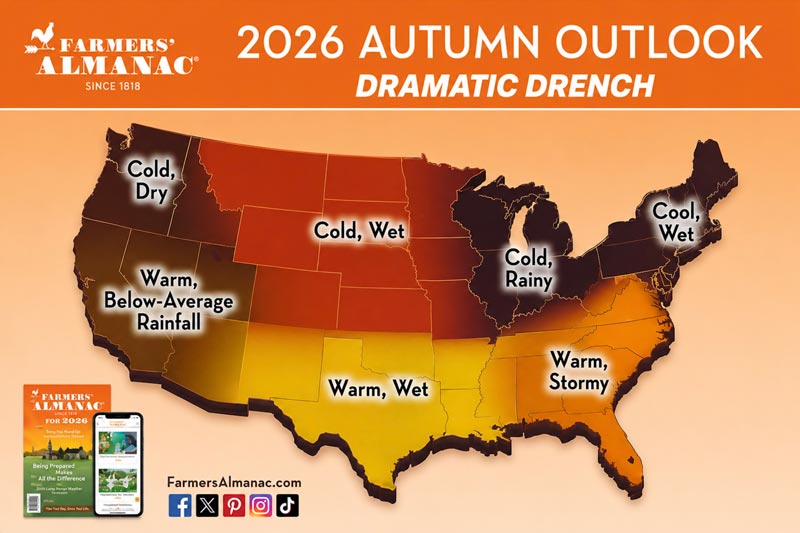
The regional outlook calls for:
- Northwest: Cold and dry
- West and Southwest: Warm with below-average rainfall
- North Central: Cold and wet
- Great Lakes and surrounding areas: Cold and rainy
- Northeast: Cool and wet
- South Central: Warm and wet
- Southeast: Warm and stormy
The Southwest should be relatively dry early in the season, while the Northeast gets some extended stretches of fair September weather. However, those patterns are not expected to last.
By Thanksgiving, a notably wetter pattern should develop across most regions, with storm systems becoming more frequent and widespread.
As for snow, the first opportunities arrive in the colder northern regions. Some higher elevations in the North Central and Great Lakes areas could see snow by mid-October, with increasingly winter-like weather as the season advances.
So whether you’re planning a fall foliage trip, getting ready for Halloween, or traveling for Thanksgiving, Fall 2026 promises plenty of changes. Warm September days will gradually give way to a much cooler and wetter finish to the season.
Source: Farmers' Almanac