
Most Oppose Voter ID Initiative; Few Californians Say Major Political Parties Have Good Ideas; Overwhelming Majorities Want Fewer Ballot Measures
September 16, 2026 - SAN FRANCISCO - With less than two months before Election Day, Californians are sending mixed messages about a 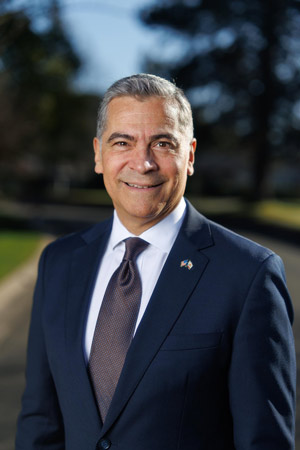 billionaire wealth tax initiative. Democrat Xavier Becerra maintains a commanding lead over Republican Steve Hilton in the race for governor. Most likely voters oppose requiring a government ID at the polls. And an overwhelming majority of Democrats, Republicans, and independents agree that their ballots are too long. These are among the key findings from a statewide survey released on Tuesday by the Public Policy Institute of California.
Full Survey Report
Fifty-two percent of likely voters say they would vote yes on Proposition 40, a highly publicized initiative that would impose a one-time tax of up to 5 percent on taxpayers with assets over $1 billion. Seven in ten Democrats support the measure. Three in four Republicans and a slim majority of independents oppose it.
However, narrow majorities also support two separate initiatives that would nullify the billionaire wealth tax proposal if either receives more votes than Proposition 40. Fifty-one percent of likely voters say they would vote for Proposition 41, which would require the state auditor to review special tax proposals before they go to voters. Fifty-four percent support Proposition 42, which would ban new taxes on personal property.
In the race for governor, Democrat Xavier Becerra continues to lead Republican Steve Hilton by a significant margin (60% to 38%). Becerra leads Hilton among independents and across age, education, gender, and income groups.
Democrat Xavier Becerra
“Affordability continues to be top of mind for Californians when considering their choice for governor,” said Mark Baldassare, PPIC Statewide Survey director and Miller Chair in Public Policy. “Sixty-five percent of likely voters say that a candidate’s plans to address cost-of-living issues are very important to their vote.”
More key findings from the survey:
- Majority oppose voter ID initiative. Fifty-five percent of likely voters say they would vote no on Proposition 39, an initiative that would require voters to show government-issued identification at the polls. Californians appear to have strong opinions on voter ID. When asked which of the fourteen propositions on the November ballot they are most interested in, Proposition 39 ranked highest, ahead of the billionaire wealth tax and other measures. Fifty-two percent of Republicans say they are most interested in Proposition 39.
Generally speaking, Californians don’t seem in the mood to change the way their elections work. Both Proposition 5, which would reform the state’s recall process, and Proposition 4, which would allow state and local governments to publicly finance campaigns, lack majority support.
- Californians don’t think Democrats, Republicans, or democratic socialists have lots of great ideas. Californians are in a gloomy mood. Seventy-one percent expect bad economic times for the state in the year ahead, with a majority saying recent price increases have caused financial hardship for their household. Majorities think the state is headed in the wrong direction.
And likely voters don’t seem confident that the two major political parties have great solutions. Only 41 percent believe the Democratic Party has “a lot of” or “some” good ideas, while 29 percent think so of Republicans. Thirty-seven percent think political leaders who identify as democratic socialists have “a lot of” or “some” good ideas.
“Californians are clearly grumpy and aren’t enamored with any particular political party or movement,” said Baldassare. “Across gender, race, and income level, voters seem skeptical of what Democrats, Republicans, and democratic socialists are offering.”
- Support for high-income tax extension, bonds. Fifty-eight percent of likely voters say they would vote yes on Proposition 3, which would make permanent higher income taxes on top earners. Support splits along partisan lines, with 82 percent of Democrats in favor and 80 percent of Republicans opposing the measure.
Californians also appear supportive of the state borrowing more money to fund certain projects. Solid majorities of likely voters support both Propositions 1 and 37, which would issue bonds to help address the state’s housing crisis. Fifty-five percent back Proposition 38, which would issue $8.4 billion in bonds for cancer research.
Proposition 43, which would raise the vote threshold for citizen-driven tax initiatives, falls short of majority support.
- Voters are exhausted by their ballot. California’s November ballot features 14 statewide ballot measures. Nearly 80 percent of likely voters say that’s too many—including more than three in four Democrats, Republicans, and independents. Frustration with the length of the ballot is consistent across geographic, racial, and income groups.
About the Survey
The Californians and Their Government survey on state, local, and national issues is supported with funding from the Arjay R. and Frances F. Miller Foundation. The findings are based on responses from 1,745 California adult residents. The sampling error is ±3 percent at the 95 percent confidence level for the total unweighted sample and ±3.8 percent for the 1,103 likely voters. Interviewing took place from September 4–September 10, 2026. For more information, please see the methodology section in the full survey report.
Mark Baldassare is statewide survey director at PPIC, where he holds the Arjay and Frances Fearing Miller Chair in Public Policy. He is founder of the PPIC Statewide Survey, which he has directed since 1998.
The Public Policy Institute of California is dedicated to informing and improving public policy in California through independent, objective, nonpartisan research. We are a public charity. We do not take or support positions on any ballot measure or on any local, state, or federal legislation, nor do we endorse, support, or oppose any political parties or candidates for public office. Research publications reflect the views of the authors and do not necessarily reflect the views of our funders or of the staff, officers, advisory councils, or board of directors of the Public Policy Institute of California.
Source: PPIC