


April 12, 2026 - SACRAMENTO, CA - Assemblymember Rhodesia Ransom has warned that California is running out of time to contain the rapid spread of invasive golden mussels, calling for immediate state action to protect water infrastructure, agriculture, and ratepayers.
Speaking during a State Budget Subcommittee hearing, Ransom urged funding for five decontamination centers in the Sacramento-San Joaquin Delta to prevent the species from spreading further across California waterways. Without immediate action, these costs are expected to be passed on to consumers and farmers.
“My community in San Joaquin County is ground zero for this infestation, and we are already seeing the damage firsthand. California has a narrow window to get ahead of this, and we are already missing it. If we don’t act now, this will only get more expensive and harder to control.”
-Assemblymember Rhodesia Ransom
Golden mussels, first detected in California in 2024, spread by attaching to boats and water systems, clogging pipes and damaging critical infrastructure. The Delta, which supplies water to roughly 30 million Californians and millions of acres of farmland, is already experiencing impacts.
Assemblymember Rhodesia Ransom emphasized that the state’s current response does not match the scale of the threat, noting that the funding under consideration is only a starting point as costs continue to rise. She added that she looks forward to seeing updates in the state’s May budget revision that address these concerns and further prioritize the golden mussel issue.
Water agencies across the state are already projecting significant expenses, including:
- Up to $100 million in upfront treatment costs for major systems
- Ongoing maintenance costs reaching tens of millions annually
- Individual cleaning operations costing as much as $150,000 per incident
She is also advancing AB 2032 - The Golden Mussel Response Act, legislation to streamline permitting and allow water agencies to respond more quickly to prevent, control, and remove invasive mussels.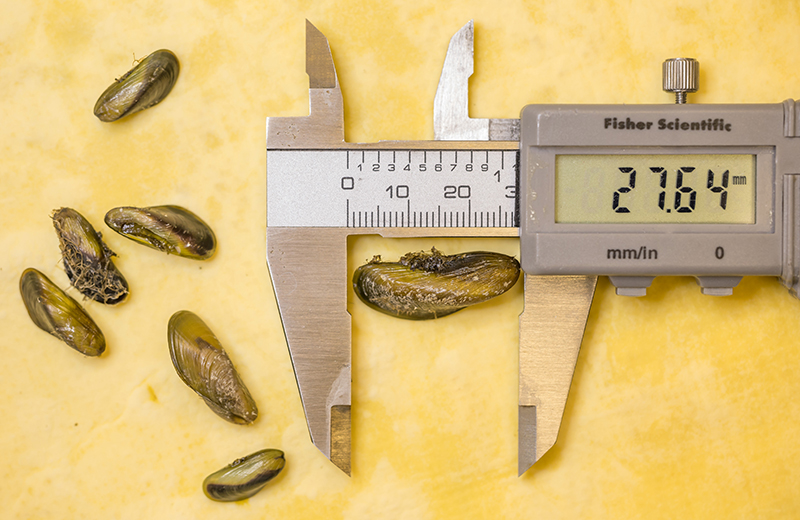
Golden mussels average about 0.75 inch and get their name from the shell’s yellow to golden color. Photo/Courtesy of California Department of Water Resources
Source: Assemblymember Rhodesia Ransom
