


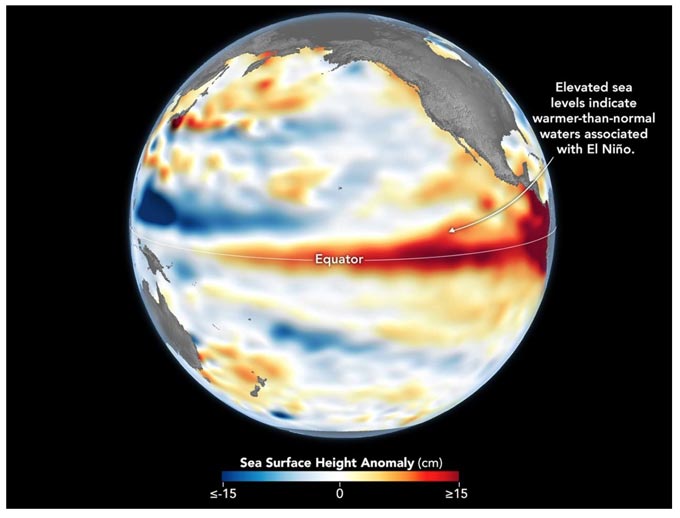
Higher-than-normal sea surfaces (red) are visible in the central and eastern Pacific on June 8, 2026, a few days before El Niño was declared. Data for the map were acquired by the Sentinel-6 Michael Freilich satellite and processed by scientists at NASA’s Jet Propulsion Laboratory (JPL). NASA Earth Observatory/Lauren Dauphin
Climate-intensified El Niño heightens flooding, mudslide, and debris-flow risks; Commissioner Lara urges consumers to consider flood insurance before 30-day waiting period since most homeowners and renter policies do not cover flooding
September 23, 2026 - SACRAMENTO, Calif. — Following Governor Gavin Newsom’s emergency declaration to strengthen statewide preparedness for a “likely historic” El Niño, Insurance Commissioner Ricardo Lara is urging Californians to review their insurance coverage now and take steps to protect their families, homes, and businesses from potential flooding, heavy rain, mudslides, and other severe weather.
Related: Proclaiming A State Of Emergency, Governor Newsom Takes Early Action To Prepare California For What Is Shaping Up To Be A Historic El Niño Season
“We share the same goal: keeping Californians safe, prepared, and protected before severe weather arrives,” said Commissioner Lara following the Governor’s declaration. “Now is the time to understand what your insurance covers, know your rights, and take steps to protect your family and property. The Department of Insurance is here to help consumers prepare, and if communities are impacted by strong storms, flooding, or other damage, we will be there to support recovery, protect consumers, and make sure insurance companies meet their obligations to policyholders.”
Californians living near areas affected by recent wildfires should also be prepared for flooding, mudslides, and debris flows from wildfire burn scars, which can be especially vulnerable to severe weather. Commissioner Lara previously sent out a Notice to insurance companies reminding them of their legal duty to cover damage from any mudslide, debris flow, or similar disaster that is caused by statewide wildfires that may have weakened hillsides.
Consumers should take the following steps before severe weather arrives:
- Review your insurance coverage. Homeowners, renters, and commercial insurance policies typically exclude damage caused by flooding, mudslides, debris flows, and other similar disasters unless they are directly or indirectly caused by a recent wildfire or another covered peril. However, policies may provide coverage for certain water damage caused by wind-driven rain. Damage caused from fallen trees is generally covered under all standard homeowner policies. Renters should review their renters’ insurance to understand coverage for their personal belongings, which generally are not covered by a landlord’s insurance policy. Consumers should contact their insurance company or agent to understand their coverage before severe weather arrives.
- Consider flood insurance. The National Flood Insurance Program provides the majority of flood insurance coverage written in California, and private flood insurance is also available. Flood insurance generally takes effect 30 days after purchase, except in the case of a home purchase where flood insurance is required by the lender. Consumers should plan rather than wait until a storm is approaching.
- Review your auto coverage. Comprehensive auto insurance can provide coverage for vehicles damaged by flooding, fallen trees, and other storm-related events. Check your auto insurance declaration page to see if this optional coverage is included in your policy or contact your insurance company or agent.
- Create a home inventory. Use your smartphone to photograph or record your home and belongings and keep copies of important insurance documents in a safe, accessible location. A current inventory can make it easier to document belongings if you need to file a claim.
- Prepare your property and family. Follow local emergency alerts and evacuation instructions, secure loose outdoor items, clear gutters and drains, and have emergency supplies and important documents ready.
This warning comes during National Preparedness Month, an annual reminder for Californians to take steps now to prepare for emergencies and disasters. Throughout the month, the California Department of Insurance is sharing preparedness information and resources to help consumers understand their insurance coverage before disaster strikes. The Department’s Outreach team is participating in several emergency preparedness events throughout the state to help inform consumers about key insurance topics and answer their questions.
The California Department of Insurance is also available to help consumers understand their insurance coverage and answer questions about policies and claims. Consumers can contact the Consumer Hotline at 800-927-4357 or visit insurance.ca.gov for information about flood insurance, wildfire-related coverage, and preparing for severe weather.
Notes:
