


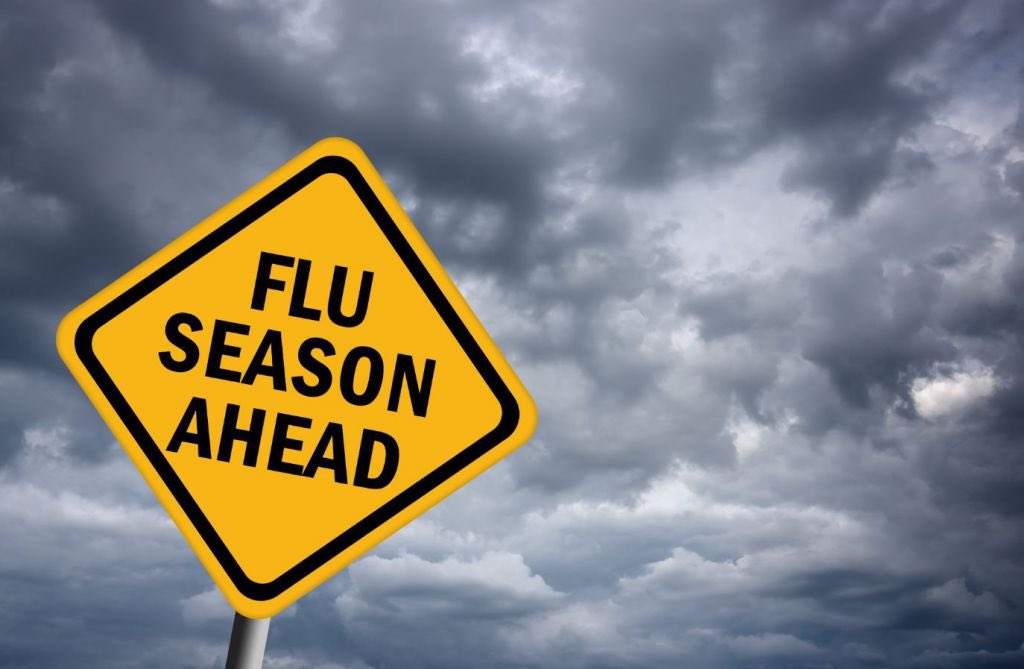
In a Q&A, Yale infectious disease specialist Scott Roberts discusses vaccine options as flu season approaches, who is at most risk, some of the myths that surround flu vaccines, and what the new mRNA vaccine could mean in the fight against influenza.
October 4, 2026 - By Karen Guzman - With flu season once again on the horizon here in the U.S., health experts say we’re now entering “vaccination season.” And October is the ideal time to get the jab, according to Scott Roberts, an infectious disease expert at Yale
“October vaccination gives you time to build peak immunity for the upcoming holiday season when traveling and gatherings spread viral activity,” said Roberts, an assistant professor at Yale School of Medicine and associate medical director in infection prevention for Yale-New Haven Health System.
This year there’s a new flu shot option. In August, the U.S. Food and Drug Administration approved the first mRNA-based flu vaccine — which builds off the mRNA technology used in many COVID-19 vaccines — for use in people 50 and older.
In an interview, Roberts debunked some of the common myths about flu vaccines, explained why some people particularly should not forego flu vaccination, and discussed the advantages that the new mRNA version may bring to the battle against influenza.
Why is it important to get a flu vaccine?
Scott Roberts: Flu is one of the big three viruses — along with COVID-19 and RSV [respiratory syncytial virus] — that lead to most hospitalizations for respiratory viruses every year. Tens of thousands of deaths are directly related to the flu virus every year. Many underlying conditions can be exacerbated by the virus. So, if you have heart failure and you get the flu, maybe you’ll recover from the flu, but it might further exacerbate your heart failure.
The best tool we have against flu is the vaccine. Of all our treatments, antivirals, and supportive care like oxygen and fluids, none is as good as prevention. An ounce of prevention is worth a pound of cure. The flu is a clear example where upfront vaccination, ideally in October, is going to give you some immunity throughout the winter.
Who should get the flu vaccine?
Roberts: Everyone can benefit, but I would absolutely urge high-risk people to get it. This includes the very young and the very old. Babies under six months old can’t get the flu vaccine, so they need to rely on maternal antibody transfer. Other high-risk groups are those with preexisting pulmonary conditions such as COPD [chronic obstructive pulmonary disease] or asthma, and those with weakened immune systems for whatever reason.
I also encourage individuals who are not at high risk to get vaccinated if they’re planning to visit family members who may be at high risk. Something that not enough people know is that if you have a family member who tests positive for flu, you can go on prophylaxis. Tamiflu, and similar medications, are highly effective at preventing the spread of flu. If you come home with some sort of flu-feeling illness, testing is the way to go. If you know what you’re dealing with, you can get the rest of the family on prophylaxis.
Why do people tend to skip the vaccine?
Roberts: There are a number of reasons. The most common one I hear is, “I got the shot, and I still got the flu.” My response is first, the vaccine functions like a seat belt. It might not prevent all illnesses. So maybe you did get sick, but maybe it prevented you from going to the hospital and going on a ventilator. The other thing I would mention is that the flu vaccine includes three types of flu strains. So even if you get one strain, there’s still benefit in being protected against the other strains.
What distinguishes the new mRNA flu vaccine from traditional flu vaccines?
Roberts: The new vaccine has a distinct advantage. With the standard flu vaccine, manufacturers need to identify the flu strains the vaccine will target six months in advance of flu season, because there is typically a six-month production window for the vaccine. With the new mRNA vaccine, Moderna [the biopharmaceutical company that developed the vaccine] is saying that the six-month prep becomes just six weeks. The obvious advantage is that the mRNA flu vaccine may be a better match to what’s circulating at the time of flu season. Last year is a good example. In September, the U.S. got hit with a newly mutated flu variant that was different enough from the vaccine strains that they had prepped months before, and we ended up having a really bad flu season last winter.
Aside from the mRNA, what other formulations are available?
Roberts: There are two modes of delivery. There’s FluMist and there’s the standard shot in the arm, the intramuscular injection. The FluMist is nice because it’s an intranasal spray. It’s good for people who don’t like needles or for people who want to administer it themselves. The problem with FluMist is that, because it’s a live vaccine, it’s not suitable for everyone. For people under the age of two, over the age of 49, or anybody with a low immune system or who is pregnant, this isn’t a good option. But if you’re, say, a healthy college kid, you can get this at a pharmacy with the pharmacist’s review. It’s the most convenient option for people who can’t go to the doctor or people afraid of needles.
And the intramuscular injection?
Roberts: If you’re not doing the mRNA, there’s a host of standard vaccine options. They come in standard dose and high dose. Most people, especially over the age of 65, are encouraged to get the high dose. That said, there are different types of standard and high doses. The best thing is to consult with you doctor about the best shot for you. And remember, any flu vaccine is better than no flu vaccine.
When should people get vaccinated?
Roberts: I recommend getting it in October. If you get it too early, you run the risk of mistiming peak immunity when the flu season is expected to spike. The other reason is that, in many years, there’s a second mini-wave of flu in the spring. And so sometimes what you see is people get vaccinated early, and their immunity wanes and wears off by the spring.
When does immunity peak?
Roberts: Optimal peak immunity would be one to two months after vaccination. Vaccination in October is good because it puts people at peak immunity for the holiday season. For the past couple years, the flu has peaked right around Christmas and New Year’s when everyone’s traveling and getting together. So, an October flu shot offers nice timing.
There are some myths about the flu vaccine that prevents some people from getting it. What are the ones that you hear most frequently?
Roberts: The first common myth is the vaccine gives you the flu. Many people do feel down, me included, after getting vaccinated. I get the flu shot. I get the COVID-19 shot, the mRNA standard dose, whatever it is, and I generally feel somewhat ill the next day — whether it’s muscle pain or fatigue or weakness. And that’s not unexpected. These are known side effects, and some of it is your body’s own natural immune response to something foreign. Another myth is: “I got the flu shot and I still get the flu, so what’s the point of vaccination?” Again, the vaccine isn’t 100% effective. But if it makes a potentially severe disease mild, it’s done its job.
There are also still mRNA-based myths. My response to that is the mRNA vaccine at this point has the most data of any vaccine. It is the most studied vaccine in terms of administrations and reports to the Vaccine Adverse Event Reporting System [VAERS]. Some people can have side effects. I think that’s true of any treatment. It’s true of any vaccine. And so, if you’re unsure, talk with your doctor.
Is there a way to tell if you’re coming down with the flu versus another virus?
Roberts: The symptoms of flu, COVID-19, and RSV are not set in stone. There’s a lot of overlap, and it can be hard to tell based on symptoms alone. But there are clues. With the flu, people typically experience an abrupt onset fever, as in “I know the exact thing I was doing when my fever started.” Then it moves into high fever, muscle aches, myalgias et cetera. COVID-19 and RSV, on the other hand, have much more gradual buildups. Maybe you’ve got a runny nose for a while, before fever and other symptoms kick in.
The incubation period for flu is shorter, too. If you see someone who has flu, and you’re sick, too, 24 hours later, that’s usually only flu or rhinovirus. But if you get sick about a week later, it’s more likely COVID-19 or RSV. Testing is the best way to confirm.
Flu Shot Vaccine Primer
• October is the ideal time to get vaccinated for flu
• Vaccination options include traditional intramuscular injections and nasal spray
• A new mRNA-based vaccine debuts this season for people 50 and older
• Experts strongly urge very young and elderly people, as well as those with pulmonary conditions or who are immunocompromised to get vaccinated.
Source: Yale School of Medicine
