


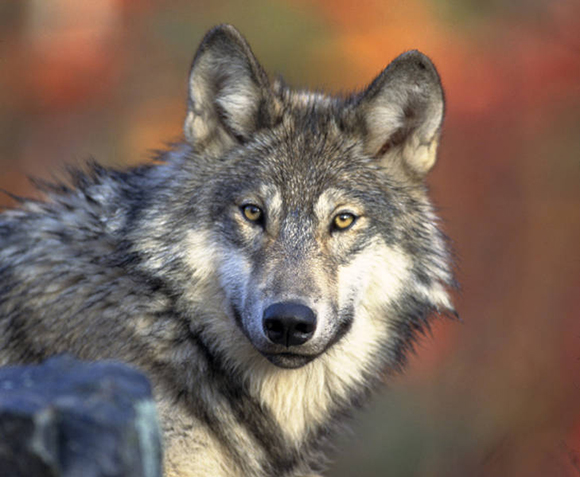
Gray wolf (Canis lupus). Photo by Gary Kramer, USFWS.
November 21, 2026 - California Department of Fish and Wildlife (CDFW) biologists recently completed a successful three-day aerial wolf capture operation, resulting in the capture and collaring of six wolves in Northern California.
Over the course of the effort, crews attempted captures in five packs and successfully deployed GPS collars on six wolves in three packs. The newly collared animals include pups and young adults, providing valuable opportunities to learn more about wolf movements, pack dynamics and population growth across the state.
GPS collars are among the most important tools available to wildlife biologists studying California's wolves. The collars collect location data at scheduled intervals, helping CDFW understand wolf movements, dispersal patterns and pack behavior. Importantly, these collars do not provide real-time tracking(external link) information.
The operation began in Sierra County with the Long Valley Pack, where biologists captured and collared two wolves. The newly collared wolves included one pup born this year and one young adult. These additions will provide increased opportunities to monitor the pack's status, movements and activities.
Crews also conducted flights over the Grizzly Pack in Plumas County but were unable to make any captures.
The following day, biologists focused on the Ashpan Pack in Shasta County. One wolf pup born this year was captured and fitted with a GPS collar. The new collar brings the total number of active collars in the Ashpan Pack to two.
Crews also flew over the Whitehorse Pack in Modoc County though no captures were made during those efforts.
The final day of operations took place in Siskiyou County with the Whaleback Pack. Biologists captured and collared three wolves, including two pups born this year and one older wolf. These additions increase the number of active collars in the Whaleback Pack to seven, making it one of the state's most closely monitored packs.
Following this effort, California now has 15 active wolf collars statewide. One collared wolf from the Harvey Pack has recently dispersed into Oregon and the GPS component of another Harvey collar recently stopped functioning (evidence suggests that wolf is also now in Oregon).
Genetic samples collected from each of the newly collared wolves will be analyzed by CDFW’s Wildlife Forensic Lab to confirm their identities and family relationships. Results will help biologists better understand connections among California’s growing wolf population.
The public wolf location map will also be updated soon to include the approximate locations of the new collars.
These successful captures highlight an important milestone for CDFW's wolf monitoring efforts. By increasing the number of active collars on the landscape, biologists gain critical information that helps inform management decisions, improve understanding of wolf ecology, identify and potentially mitigate areas of wolf-livestock conflict, and track the continued recovery and expansion of wolves throughout the state.
Source: CDFW
